
Smarter math, better power grids
Advanced risk probabilities light the way for future power systems
Jul 17, 2026
Source: iStock
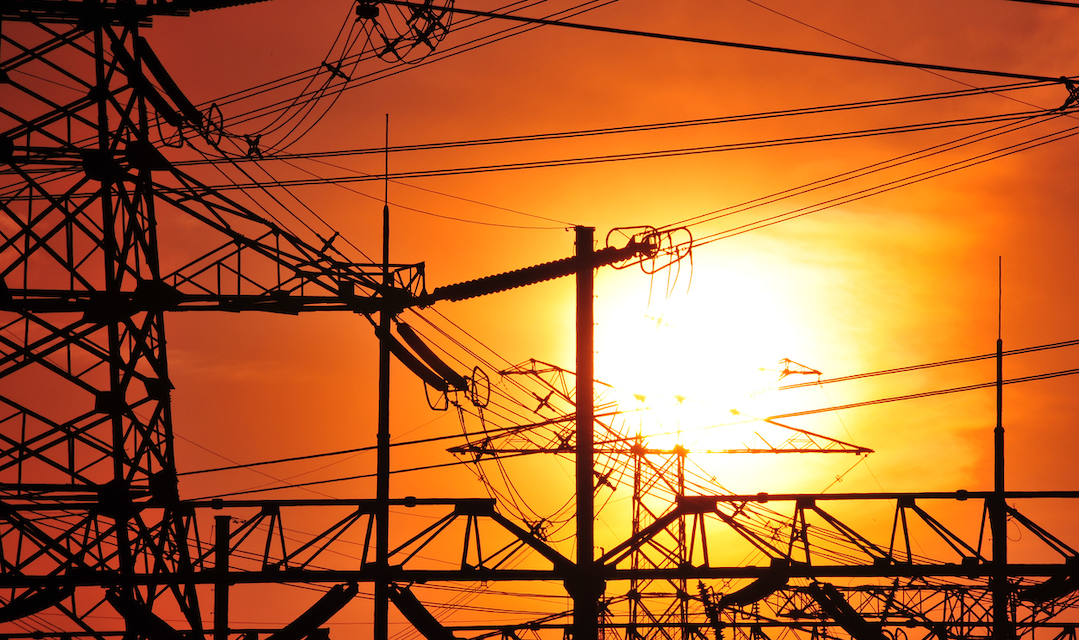
How can we keep our electrical grids reliable and resilient?
When power generators suddenly fail, most people only care about keeping the lights and air conditioning on. But for the engineers who design our electrical grids and power plants, preventing those blackouts requires balancing an incredibly complex puzzle of future costs and unpredictable failures.
Two areas of concern are reliability and resilience. Reliability offers an uninterrupted supply of electricity to satisfy the load demand while resilience allows for quick recovery of operating conditions after disruptions occur.
Researchers at Carnegie Mellon University’s Department of Chemical Engineering found that the type of math used by grid planners to prepare for these emergencies drastically changes both the cost of electricity and the ultimate reliability of the grid. The findings, published in IEEE Transactions on Power Systems*, explore a critical flaw in how we prepare our energy infrastructure for a changing world.
Historically, utility companies have used simplified formulas to plan grid expansions. One common method, the "reserve margin," simply ensures a grid has a blanket percentage of extra power on standby. Another, known as "N-k reliability," calculates whether a system can survive the simultaneous failure of a specific number of power generators or lines.
However, these traditional methods treat risks as flat rules rather than calculating the actual, shifting probabilities of equipment failures.
"We wanted to see what happens when you stop using shortcuts," said Professor of Chemical Engineering Ignacio Grossmann, the study’s senior author. "By building an advanced mathematical model that accounts for the actual probability of low- and high-order equipment failures, we can accurately predict not just if a blackout will happen, but exactly how long it will last and how much energy will be lost."
Source: College of Engineering, Carnegie Mellon University
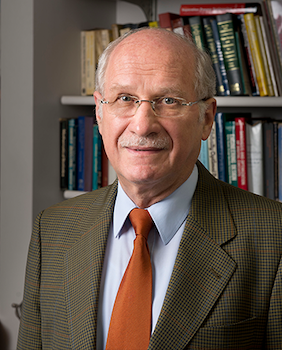
Ignacio Grossmann is the Rudolph R. and Florence Dean University Professor in Carnegie Mellon University's Department of Chemical Engineering.
To prove their point, the team utilized an advanced mathematical framework called Generalized Disjunctive Programming to test four distinct planning models, ranging from ignoring reliability considerations, applying the reserve margin and N-k reliability formula, to the advanced probabilistic model. They applied these models to a real-world case study of the power grid in San Diego County, California, mapping out a 10-year expansion plan.
The researchers discovered that the math models used completely alters the physical layout of the grid. When planners used simplified formulas like the reserve margin, the math model designed a centralized grid—clustering massive power plants together. However, when the researchers forced the computer to use rigorous, probabilistic risk modeling, it built a highly distributed network, spreading smaller generators out and adding extra transmission lines to weave them together.
The study noted a stark trade-off for sustainability and consumers: the highly rigorous probabilistic models require somewhat higher upfront investments and operational costs. However, they dramatically reduce blackouts, measured by metrics like "loss of load expectation" (the duration of darkness) and "expected energy not served" (the total electricity shortage).
This trade-off sits at the heart of global energy sustainability. As the world transitions to renewable energy sources like wind and solar, power grids are becoming inherently more variable and less predictable than older grids reliant on coal or natural gas.
If planners rely on outdated, oversimplified math, they risk building grids that are cheap on paper but prone to unreliable delivery of electric power. Conversely, over-engineering the grid using strict rules could drive energy bills to unaffordable heights.
While the researchers proved that their advanced probabilistic model creates a safer grid, they acknowledged a major hurdle: the complexity of the mathematical model can require long computational times, making it difficult to scale up to massive grids with hundreds of power hubs.
The team's next steps involve developing faster algorithms to simplify these calculations, giving global grid operators a practical tool to build the most reliable, cost-effective, and green power systems possible. Furthermore, they have also addressed recently the design of resilient power plants that are subjected to major disruptions such as extreme weather events that may damage transmission lines and generators.**
Seolhee Cho, a Ph.D. graduate of the Department of Chemical Engineering, was the first author on this research. Javier Tovar-Facio of the Universidad Autónoma de Chihuahua (Mexico) collaborated on this work. The research was supported by the National Energy Technology Laboratory (NETL)’s Institute for the Design of Advanced Energy Systems and the U.S. Department of Energy’s Office of Fossil Energy and Carbon Management.
For media inquiries, please contact Lisa Kulick, lkulick@andrew.cmu.edu
*Cho, S., J. Tovar-Facio and I. E. Grossmann “Impact of Reliability Formulations on the Optimal Planning and Operation of Power Systems,” IEEE Transactions on Power Systems, vol. 41, no. 2, pp. 927-941 (2026).
**Cho, S. and I. E. Grossmann. “Two-stage Stochastic Programming Model and Solution Strategy for Proactive Planning and Reactive Operations of Resilient Power Systems under Disruptions,” International Journal of Electrical Power and Energy Systems 173, 111419 (2025).